Τετάρτη 16 Μαΐου 2018

Save the Wave


Marine Ecosystems under threat

How would we really feel, if we were told that we are eating our own waste?
How aware are we of the fact that the world population eats toxin-saturated fish?

Anthropic activities undoubtedly change environment rapidly and all living beings are being affected by this.


Marine debris is nowadays one of the most widespread pollution problems. In fact, bad management of waste causes pollution and more than 8 million tons of plastic are dumped in oceans every year. As a consequence, species go extinct faster than ever: animals are surrounded by waste and 1 in 3 species of marine mammals has been found entangled in marine litter. Facts indicate that over 90% of all seabirds have plastic pieces in their stomach and every sea creature is swallowing the seawater soup instilled with toxic chemicals from plastic decomposition…
Micro-pollution is even more present and encompasses more than plastic, including metals, glass, and other materials. The world population eats toxin-saturated fish.
In essence, humans are eating their own waste…

The aim of the “Save the Wave” project, under the frame of the Erasmus+ programme, is to share knowledge and experience in marine biodiversity conservation strategy, reflect on sustainable development environmental aspects, discuss about marine ecology and learn more about marine biology.

For the purposes of this project, 21 young people from Croatia, Greece and Portugal will meet twice, at the end of June 2018 and middle September 2018, to search together for answers to marine pollution problems, find the differences among several marine ecosystems in flora and fauna, and exchange good practices on recycling and sustainable development in coastal zone.


The activities of both meetings in Poreč (Croatia) and Madeira (Portugal) will include presentations, research, analyzing, group and individual work, storytelling.


Coordinator of the “Save the Wave” project is “Udruga Prizma” in Croatia (www.udrugaprizma.hr) and partners are the “Teatro Metaphora” in Portugal (www.teatrometaphora.org) and “Dione” local development centre in Greece (dionildc.blogspot.gr).


For more information, you can contact:
Silvestar Petrov info@udrugaprizma.hr
José António Rodrigues josebarros7@gmail.com

Δευτέρα 15 Ιανουαρίου 2018

How far is modern Elis (Ileia) from Sustainability?


A youth workshop in Pyrgos for the dissemination of the"Green Life for a Healthy Life" project

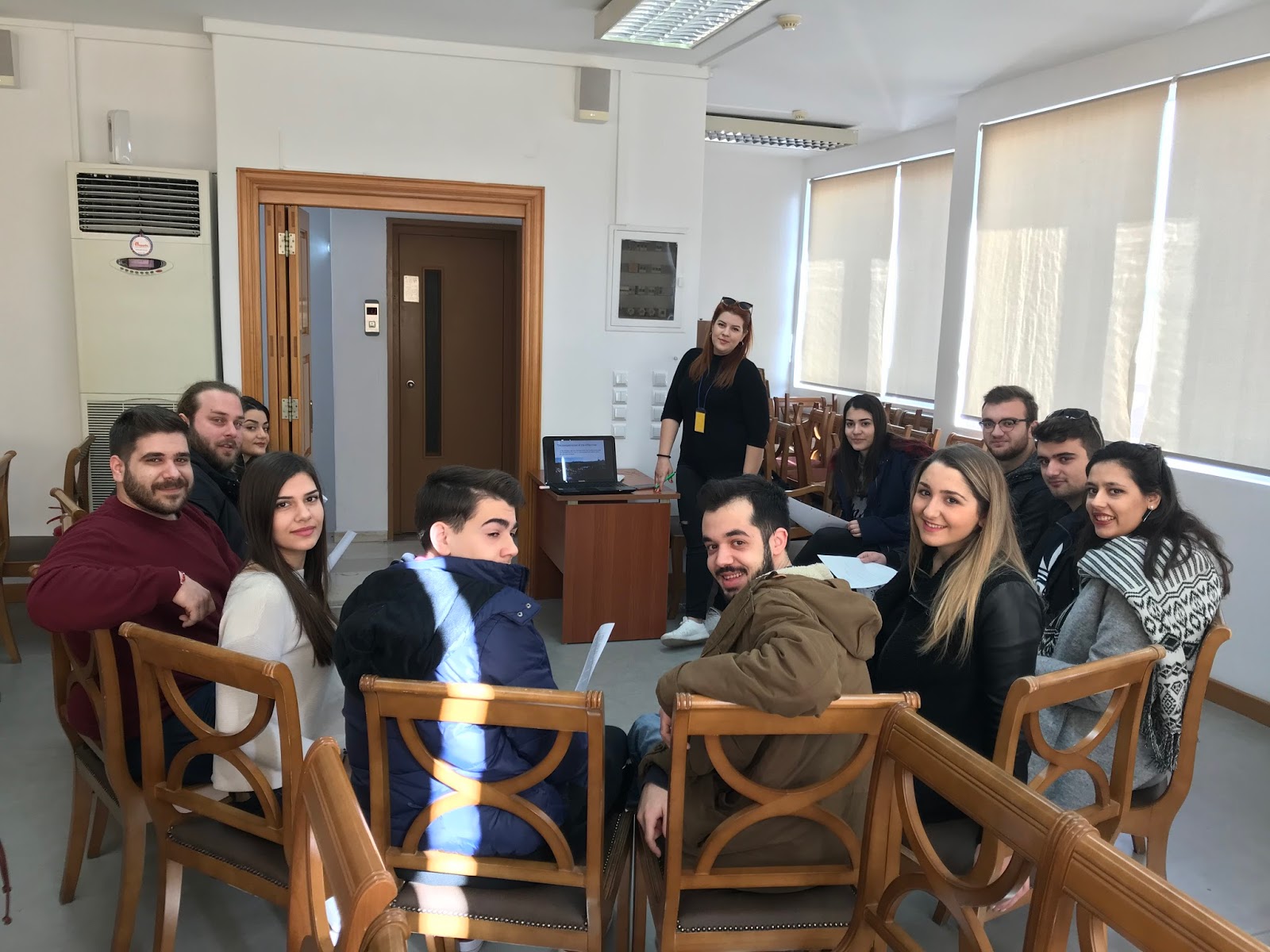
Attempting to respond to the question above, the 8 young people from Ileia who participated from 21 to 30 August 2017 in the youth exchange in Romania, in the framework of the project "Green Life for a Healthy Life", gathered in Pyrgos, the capital city of Elis county.


The workshop took place in 4 January 2018 in the meeting hall of the Elis’ Chamber of Commerce and its objective was the dissemination of the conclusions and the gained knowledge of the project to the Greek youth of the region.
The aim of the "Green Life for a Healthy Life" project was to record modern environmental issues at local level and to seek solutions through the use of renewable energy sources as an antidote to the destruction of the environment.


The table below presents the fields of study that the Greek group successfully covered:

Field of Study
Theme
Greek participant
Pollution and Environment
The Impact of Pollution on Environment
Aikaterini Michalopoulou
Solar Energy
Electricity from Solar Energy
Eleni Dakoura
Wind Energy
Wind and Electricity
Ilias Iliopoulos
Biopower
Biogass at Home
Andreas Angelopoulos
Solar Energy
Solar Hot Water
Dionysios Antonopoulos
Hybrid Power Systems
Green Idea for a Green House
Andriana Maria Varela
Local Utility of Renewable Energy
Local Renewable Energy Resources
Spilios Varelas
The Future of Renewable Energy
Fossil Fuels vs. Renewable Energy Resources
Eleni Michalopoulou

The “Green Life for a Healthy Life” project is implemented by The Green Teach Association (Candesti, Dambovita) and the local development centre “Dione” (Ancient Olympia, Elis), under the Erasmus+/ Key Action Learning Mobility of Individuals programme.
  

Κυριακή 10 Δεκεμβρίου 2017

Managing Workplace Foreign Language Competency


How can I build an inclusive & effective foreign language strategy for my company?
A guide for SMEs

A guide about the practices that SMEs can put in place to set up an effective plan for the improvement of their foreign language competence is created by the local development centre “Dione” in Elis (Ileia), in collaboration with the Erasmus Intern Anh Bui Mai Nguyen (Master Degree in Marketing, University of Oulu, Finland).


The aim of this guide is to become the starting point for the Greek small and medium sized enterprises (SMEs) located in Elis region (Ileia) of exploring the nature of language and cultural barriers in trade, searching for the best practice on how to overcome language and cultural barriers by adopting innovative practice in handling communication across borders, considering about the commercial value of using language strategies and their impact on a company’s bottom-line with governments, business agencies, intermediary organizations (like chambers, regional governments etc), and identifying ‘magic formulas’ that SMEs can apply to improve their cross-border activity, particularly in global ‘foreign language’ markets.

The guide highlights the following points:
  •         Management commitment
  •         Build a team of champions
  •         Reinforce employees’ competencies
  •         Communicate effectively
  •    Evaluate effectiveness 
 Guide

Τετάρτη 15 Νοεμβρίου 2017

What should Elis (Ileia) learn from Dambovita’s local development in Romania?


4 key-questions to a successful 
female mayor


4 key-questions to a successful female mayor with long contribution to the local development and achievements that any modern politician would be thrilled to obtain, were the basis for a fruitful discussion that revealed the similarities and highlighted the differences between Dambovita county in Romania and Elis county in Greece.


Mrs Popa Georgeta, the experienced and creative mayor who changed the life of Candesti by turning innovative ideas to action, met at the City Hall (http://primariacandesti.ro/) with Vaso Charitopoulou, the founder and general manager of “Dione” local development centre established in Ancient Olympia. The meeting took place during the Advanced Planning Visit as part of the “Green Life for a Healthy Life” project under the frame of the Erasmus+ programme, coordinated by the “Green Teach” Association.   
                        

Dambovita is a rural province, famous for the cultivation of apples. 
Aiming at increasing the level of motivation to the residents to remain in the region, the mayor is focused on improving the living conditions of Candesti. The milestones of her policy are creating new working places in Agriculture and boosting quality services to the citizens, such as free transport for the residents of Candesti who work in the urban centers of the country, as well as for the school pupils, and free heating, cleaning and maintenance to the schools of the municipality.
The local economy is based mainly on Agriculture, explained the mayor, who proudly described that the condition for co-funded projects by EU is that beneficiaries will remain in the region for at least 5 years after the implementation of each project on the sector of Rural Development.

Beside Agriculture, Education, Culture/ Tradition, and Health, are the top priorities of her local development strategy, explained Mrs Popa Georgeta while displaying on her computer interesting videos and photos of various events, activities and initiatives that she has organized and/or coordinated, with significant social impact.


The hard working mayor, being open minded and traditional at the same time, is sending a message to any current and potential future mayor of Elis (Ileia) in Greece: sincere love for the fellow citizens, respect to the oldest generations, cooperation and relations in terms of quality and honesty, are the secret for a successful, long mayoral term.
How close to this concept are the politicians of Elis?

Τρίτη 31 Οκτωβρίου 2017

“Social UP” for the challenges of social enterprises


"Dione" at the “Social UP” for the challenges of social enterprises

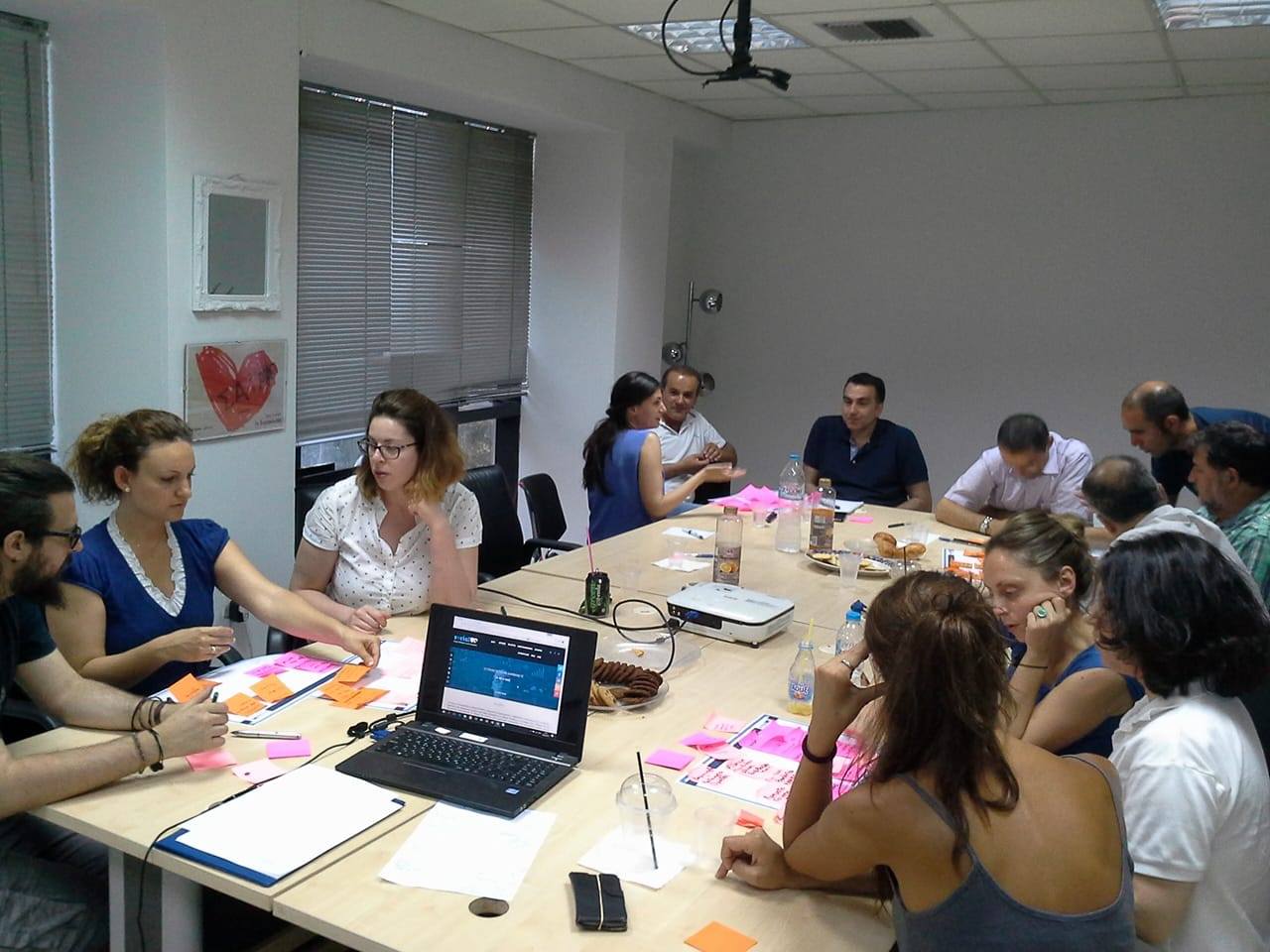
Through a brief interactive workshop, based on design thinking techniques, involving social entrepreneurs, business consultants, VET trainers, social partners and design thinkers, the participants approached objectives and challenges of social enterprises, discussed and validated prior Social UP project research (desk, survey with social entrepreneurs and social partners, interviews with design thinkers) in view of empowering social entrepreneurship in a multi-faceted and participatory way.


Internationally acclaimed British design thinker James Rock, head of DesignThinkersUK and the Social UP project, member of the international network of DesignThinkers Group, present in 20 countries (including in Greece) around the world involving over 25,000 design thinkers, participated online with a short presentation about Design Thinking, its principles and tools.

The mini experiential workshop and exchange of views facilitated by Knowl social enterprise for life long learning and Militos Consulting S.A., Greek partners of Social UP I Design Thinking for Social Enterprises.
The local development centre “Dione”, established in Ancient Olympia, participated in the workshop on creative thinking on the challenges of social enterprises.


The collection of the data was made using DT tools, such as the Issue Maps and Issue Cards that the participants renamed to Challenge Maps and Challenge Cards to better reflect the workshop aim and topic, the impact/difficulty Grid, etc.
The process was as follows:
-Introduction on the aims of the workshop and the Social UP project.
-Introduction of all members of the group (name, activities, organisation represented, function, target group representation, expectations).
-Presentation of Design Thinking online through skype and video connection by Social UP leader and renowned design thinker James Rock, DesignThinkers UK.
-Formation of 4 groups, mixing up target group representatives (3 people per group).
-Identification by each group member individually of challenges and writing down on post-its.
-Utilisation of Challenge Maps in groups to discuss all challenges and identify the 2-3 top ones per group (total of 8-12 top challenges for all groups).
-Fleshing out the 2-3 top challenges in group, using the Challenge Cards (one card for each selected challenge).
-Design of grid on the wall, based on 2 criteria (difficulty, impact).
-Positioning of top challenges on this grid through extensive discussion.
-Identification of the challenges with the highest/lowest impact and lowest/highest difficulty and the ones in between.


Outcome: 
The Grid shows the commonly agreed top challenges and their positioning with regard to their impact and difficulty to address.
A lot of discussion accompanied the positioning/ prioritisation (some challenges were changing positions, as should be).
It was finally agreed that without vision (“όραμα”) and a good/ functional team (“λειτουργία ομάδας”), impact and sustainability of social enterprises will be highly affected and remain limited. 
Lack of awareness/ divergent views of society on social enterprises and their work was the challenge that was equally impactful and difficult to address.
However, the latter finding was the first point discussed and put on the Grid and while the discussion was developing, it seemed that, if there was more time for debate, the positioning of some challenges would change (again).


Overall, the most important challenges in terms of impact, in priority order (from highest to lowest), were as follows,
while their level of difficulty differs (see next to each one from 1-8 with 1 the most difficult and 8 the least difficult):
Highest impact // 1 most difficult to address
  • ·        Vision 6
  • ·        Team formation 4
  • ·        Lack of awareness/ divergent views of society on social enterprises and their work 1
  • ·        Motivation and collaboration 2
  • ·        Legal Framework 3
  • ·        Know-how 8
  • ·        Reality check (also a DT tool) 7
  • ·        Business (profit) vs social dimensions in social entrepreneurship 5

Lowest impact // 8 least difficult to address

Δευτέρα 23 Οκτωβρίου 2017

Social UP - Design Thinking για Κοινωνικές Επιχειρήσεις


Η «Διώνη» & η «Eco Δίβρης ΚοινΣΕπ» εκπροσώπησαν την Ηλεία στο Social UP - Design Thinking 

Στο ίδιο τραπέζι με άλλους κοινωνικούς επιχειρηματίες, επιχειρηματικούς συμβούλους, εκπαιδευτές και design thinkers από όλη την Ελλάδα,


βρέθηκαν το κέντρο τοπικής ανάπτυξης «Διώνη» και η «Eco Δίβρης ΚοινΣΕπ», ως εκπρόσωποι της Ηλείας,


και με έναν τρόπο διαφορετικό, που αντλεί από τη νοοτροπία του design thinking και χρησιμοποιεί εργαλεία του, 


εργάστηκαν με τεχνικές ενεργής ακρόασης και δημιουργικού διαλόγου πάνω στις σημαντικότερες προκλήσεις που αντιμετωπίζουν σήμερα οι κοινωνικές επιχειρήσεις στην Ελλάδα.


Το μίνι αυτό βιωματικό εργαστήριο διοργανώθηκε στα γραφεία της Knowl στην Αθήνα, σε συνεργασία με την  Μίλητο Συμβουλευτική Α.Ε.  στο πλαίσιο του ευρωπαϊκού έργου Social UP - Design Thinking για Κοινωνικές Επιχειρήσεις.

Παρασκευή 20 Οκτωβρίου 2017

Job finding tools & process


A dynamic youth workshop in Pyrgos

An one-day workshop aiming at introducing to the young people of Pyrgos in Elis (Ileia) county of Peloponnese, the various modern tools and processes connected to finding a job, and encouraging the local youth to get actively involved in the labour market,
was organized and successfully implemented by the local development centre “Dione” and the Erasmus Young Entrepreneur from Liberia, Emmanuel Dweh Togba.


The workshop that brought together local youngsters from Pyrgos and the surrounding cities, stressed the need for young people to get acquainted with key tools and processes included in searching and getting a job in their career area.
Some of the main conclusions of the workshop were that staying on the job is equally important as getting the job and that young people should concentrate in developing their career skills so as to become competitive and gain a strong advantage in the demanding, challenging modern world!