Σάββατο 20 Οκτωβρίου 2018

Catch the pulse of modern India and be part of the change!


Apply now to the Volunteer Paid Teaching and Youth Exchange projects

India has emerged as the fastest growing major economy in the world and is expected to be one of the top three economic powers of the world over the next 10-15 years, backed by its strong democracy and partnerships. 
India’s GDP is estimated to have increased 6.6 per cent in 2017-18 and is expected to grow 7.3 per cent in 2018-19. In April-July quarter of 2018-19, the GDP grew by 8.2 per cent. 
India has retained its position as the third largest startup base in the world with over 4,750 technology startups, with about 1,400 new start-ups being founded in 2016, according to a report by NASSCOM. 
India's labour force is expected to touch 160-170 million by 2020, based on rate of population growth, increased labour force participation, and higher education enrolment, among other factors, according to a study by ASSOCHAM and Thought Arbitrage Research Institute. 


Recent Developments 

With the improvement in the economic scenario, there have been various investments in various sectors of the economy. The M&A activity in India increased 53.3 per cent to US$ 77.6 billion in 2017 while private equity (PE) deals reached US$ 24.4 billion. Some of the important recent developments in Indian economy are as follows: 
  • Exports from India increased 20.7 per cent year-on-year to US$ 221.83 billion in April-August 2018. 
  • Nikkei India Manufacturing Purchasing Managers’ Index (PMI) was at 51.7 in August 2018, showing expansion in the sector. 
  • Mergers and acquisitions (M&A) activity in the country has reached US$ 74.8 billion in 2018 (up to August). 
  • Income tax collection in the country reached Rs 10.03 lakh crore (US$ 137.75 billion) in 2017-18. 
  • Companies in India have raised around Rs 21,000 crore (US$ 2.88 billion) through Initial Public Offers (IPO) in 2018 (up to August). 
  • India's Foreign Direct Investment (FDI) equity inflows reached US$ 389.60 billion between April 2000 and June 2018, with maximum contribution from services, computer software and hardware, telecommunications, construction, trading and automobiles. 
  • India's Index of Industrial Production (IIP) rose 5.4 per cent year-on-year in April-July 2018. 
  • Retail inflation in the country was at a 10 month low of 3.69 per cent in August 2018, while wholesale inflation was at 4.53 per cent. 
  • Around 10.8 million jobs were created in India in 2017. 
  • The top 100 companies in India are leading in the world in terms of disclosing their spending on corporate social responsibility (CSR), according to a 49-country study by global consultancy giant, KPMG. 
  • The bank recapitalisation plan by Government of India is expected to push credit growth in the country to 15 per cent, according to a report by Ambit Capital. 
  • India has improved its ranking in the World Bank's Doing Business Report by 30 spots over its 2017 ranking and is ranked 100 among 190 countries in 2018 edition of the report. 
  • India's ranking in the world has improved to 126 in terms of its per capita GDP, based on purchasing power parity (PPP) as it increased to US$ 7,170 in 2017, as per data from the International Monetary Fund (IMF). 
  • India is expected to have 100,000 startups by 2025, which will create employment for 3.25 million people and US$ 500 billion in value, as per Mr T V Mohan Das Pai, Chairman, Manipal Global Education. 
  • The World Bank has stated that private investments in India is expected to grow by 8.8 per cent in FY 2018-19 to overtake private consumption growth of 7.4 per cent, and thereby drive the growth in India's gross domestic product (GDP) in FY 2018-19. 
  • Moody’s upgraded India’s sovereign rating in November 2017 after 14 years to Baa2 with a stable economic outlook. 
Government Initiatives 

The Union Budget for 2018-19 was announced by Mr Arun Jaitley, Union Minister for Finance, Government of India, in Parliament on February 1, 2018. This year’s budget will focus on uplifting the rural economy and strengthening of the agriculture sector, healthcare for the economically less privileged, infrastructure creation and improvement in the quality of education of the country. As per the budget, the government is committed towards doubling the farmers’ income by 2022. A total of Rs 14.34 lakh crore (US$ 196.94 billion) will be spent for creation of livelihood and infrastructure in rural areas. Budgetary allocation for infrastructure is set at Rs 5.97 lakh crore (US$ 81.99 billion) for 2018-19. All-time high allocations have been made to the rail and road sectors. 
India's unemployment rate is expected to be 3.5 per cent in 2018, according to the International Labour Organisation (ILO). 
Numerous foreign companies are setting up their facilities in India on account of various government initiatives like Make in India and Digital India. Mr. Narendra Modi, Prime Minister of India, has launched the Make in India initiative with an aim to boost the manufacturing sector of Indian economy, to increase the purchasing power of an average Indian consumer, which would further boost demand, and hence spur development, in addition to benefiting investors. The Government of India, under the Make in India initiative, is trying to give boost to the contribution made by the manufacturing sector and aims to take it up to 25 per cent of the GDP from the current 17 per cent. Besides, the Government has also come up with Digital India initiative, which focuses on three core components: creation of digital infrastructure, delivering services digitally and to increase the digital literacy. 
Some of the recent initiatives and developments undertaken by the government are listed below: 
  • The Union Cabinet gave its approval to the North-East Industrial Development Scheme (NEIDS) 2017 in March 2018 with an outlay of Rs 3,000 crores (US$ 460 million) up to March 2020. 
  • Around 855,000 houses have been constructed up to August 21 2018, under Government of India’s housing scheme named Pradhan Mantri Awas Yojana (Urban). 
  • Village electrification in India was completed in April 2018. 
  • Around 10.16 million households have been electrified up to August 09, 2018 under the Pradhan Mantri Sahaj Bijli Har Ghar Yojana (SAUBHAGYA). 
  • Prime Minister's Employment Generation Programme (PMEGP) will be continued with an outlay of Rs 5,500 crore (US$ 755.36 million) for three years from 2017-18 to 2019-20, according to the Cabinet Committee on Economic Affairs (CCEA). 
  • In February 2018, The Union Cabinet Committee has approved setting up of National Urban Housing Fund (NUHF) for Rs 60,000 crore (US$ 8.24 billion) which will help in raising requisite funds in the next four years. 
  • The target of an Open Defecation Free (ODF) India will be achieved by October 2, 2019 as adequate funding is available to the Swachh Bharat Mission (Gramin), according to Ms Uma Bharti, Minister of Drinking Water and Sanitation, Government of India. 
  • The Government of India has decided to invest Rs 2.11 trillion (US$ 32.9 billion) to recapitalise public sector banks over the next two years and Rs 7 trillion (US$ 109.31billion) for construction of new roads and highways over the next five years. 
  • The mid-term review of India's Foreign Trade Policy (FTP) 2015-20 has been released by Ministry of Commerce & Industry, Government of India, under which annual incentives for labour intensive MSME sectors have been increased by 2 per cent. 
  • The India-Japan Act East Forum, under which India and Japan will work on development projects in the North-East Region of India will be a milestone for bilateral relations between the two countries, according to Mr Kenji Hiramatsu, Ambassador of Japan to India. 
  • The Government of India will spend around Rs 1 lakh crore (US$ 13.73 billion) during FY 18-20 to build roads in the country under Pradhan Mantri Gram Sadak Yojana (PMGSY). 
  • The Government of India plans to facilitate partnerships between gram panchayats, private companies and other social organisations, to push for rural development under its 'Mission Antyodaya' and has already selected 50,000 panchayats across the country for the same. 
  • The Government of India and the Government of Portugal have signed 11 bilateral agreements in areas of outer space, double taxation, and nano technology, among others, which will help in strengthening the economic ties between the two countries. 
Road Ahead 

India's gross domestic product (GDP) is expected to reach US$ 6 trillion by FY27 and achieve upper-middle income status on the back of digitisation, globalisation, favourable demographics, and reforms. 
India's revenue receipts are estimated to touch Rs 28-30 trillion (US$ 385-412 billion) by 2019, owing to Government of India's measures to strengthen infrastructure and reforms like demonetisation and Goods and Services Tax (GST). 
India is also focusing on renewable sources to generate energy. It is planning to achieve 40 per cent of its energy from non-fossil sources by 2030 which is currently 30 per cent and also have plans to increase its renewable energy capacity from to 175 GW by 2022. 
India is expected to be the third largest consumer economy as its consumption may triple to US$ 4 trillion by 2025, owing to shift in consumer behaviour and expenditure pattern, according to a Boston Consulting Group (BCG) report; and is estimated to surpass USA to become the second largest economy in terms of purchasing power parity (PPP) by the year 2040, according to a report by PricewaterhouseCoopers. 

(Source: ibef, 16.10.2018) 

Serving the purpose of the better understanding of international communities and upliftment of education of disadvantaged school children in India by providing them exposure and opportunity to mingle with and understand different world cultures, Sagreen international Educational Trust (SIET) -a registered trust in India committed in providing quality Volunteer Paid Teaching opportunities in India in the field of language, sports, Music, Arts, Crafts and Youth Exchange since 1999- 
and “Dione” local development centre established in 2012 at Ancient Olympia in Greece, 
provide international Volunteer Paid Teaching and Youth Exchange projects at host schools in the States of Kerala, Tamilnadu, Karnataka, Punjab and Andaman & Nicobar Islands in India. 


Choosing a period between 4 and 12 months, international Volunteers and Interns can participate to the Volunteer English Teaching Internship program, the Volunteer Montessori Teaching Internship program, the Volunteer Sports Internship program, the Volunteer Music/Arts/Crafts/Sciences Teaching Internship program and the Youth Exchange Programs. 


Accommodation, meals, monthly stipend (Rs.8500- Rs.20000), two day beach holiday upon arrival, Wi-Fi, laundry facility and other organised services are provided by the Program. 
The project provides a unique opportunity to the Interns to take classes in Kindergartens, Pre-school, Elementary school, Middle school and High school. 


In addition, the teaching interns will have the opportunity to assist in academic works and participate in academic seminars and workshops. An internee who participates in the internship program becomes part of a unique Indian culture and community sharing knowledge of his culture and language with teachers and students. In return an internee can experience life in Indian culture and community and acquire sharing of knowledge, skill and learn different languages. 


Credit Certificates after successful completion of teaching in India will be provided to each Volunteer. 


Take the opportunity and apply now! 

Contact: Vaso Charitopoulou, vasso-charitopoulou@hotmail.com & ldcdioni@otenet.gr


Πέμπτη 6 Σεπτεμβρίου 2018

Imagine our planet with no plastic pollution!


Let me stop here. Let me, too, look at nature awhile.
The brilliant blue of the morning sea, of the cloudless sky,
the yellow shore; all lovely, all bathed in light.”


Morning Sea ( C.P. Cavafy)

Have we ever wondered about how much waste we produce in daily life?
How much aware are we of how many materials of this waste are recyclable?
Could some of them get easily and costlessly transformed to beautiful toys, to modern photo / painting frames, to useful pen cases?


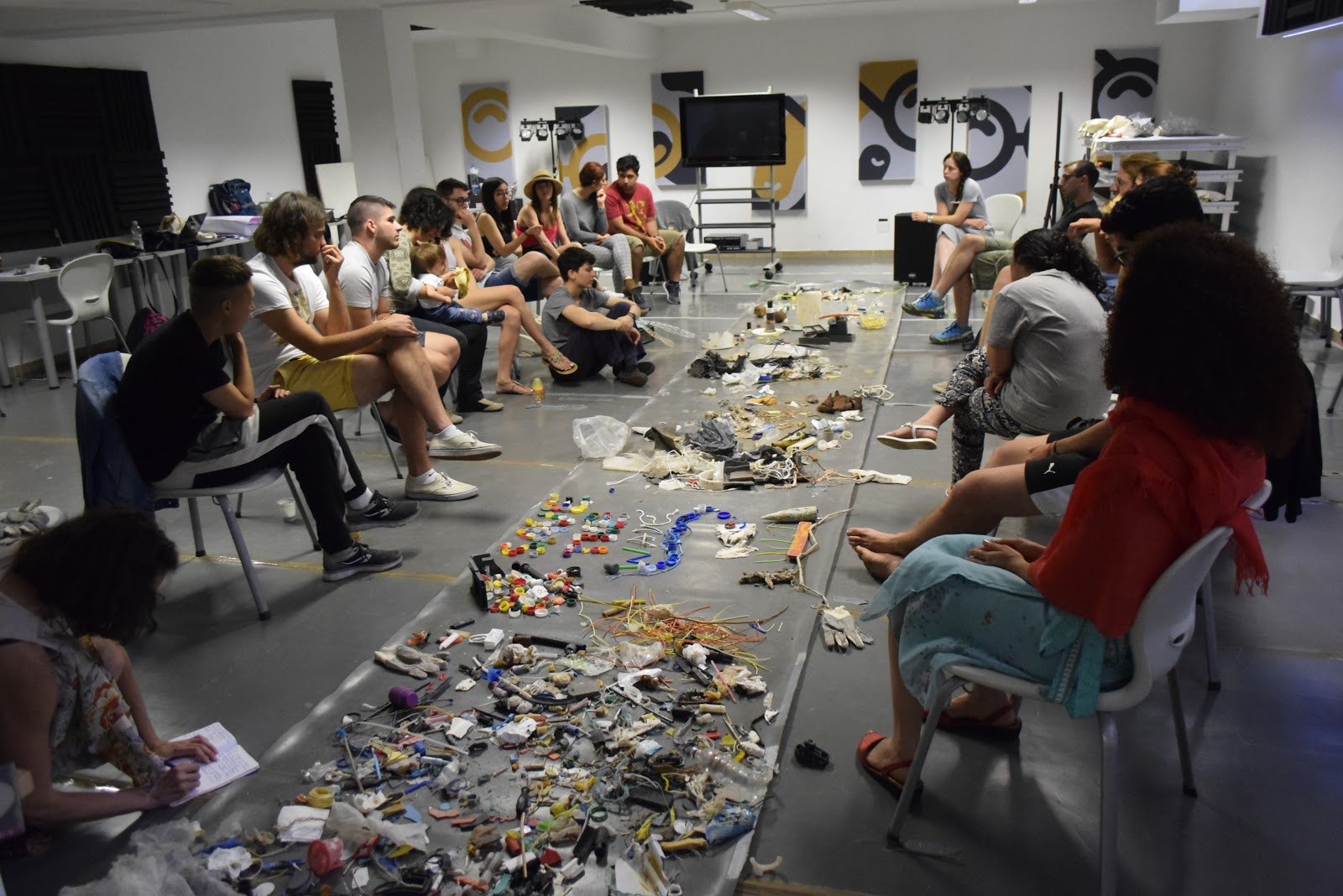
The objective of the second and last meeting of the Croatian, Greek and Portuguese groups from 13th to 19th September in Madeira (Portugal) is to discover, under the frame of the “Save the Wave” project, how much effort each participating country makes to fight plastic pollution, and which policies they develop and implement for the preservation of marine.


The three groups will also explore and research about their national poets, painters, sculptors, artists, who are deeply connected with nature and sea.
The activities of the meeting in Madeira will include presentations, research, analyzing, group and individual work, storytelling.


Coordinator of the “Save the Wave” project is “Udruga Prizma” in Croatia (www.udrugaprizma.hr) and partners are the “Teatro Metaphora” in Portugal (www.teatrometaphora.org) and “Dione” local development centre in Greece (dionildc.blogspot.com).


For more information, please contact:
Silvestar Petrov info@udrugaprizma.hr
José António Rodrigues josebarros7@gmail.com

Photos: Anastasia Tasoula

Πέμπτη 19 Ιουλίου 2018

Αμειβόμενες θέσεις για εθελοντές εκπαιδευτές & φοιτητές στην Ινδία


Αμειβόμενες θέσεις για εθελοντές εκπαιδευτές και φοιτητές στην θελκτική Ινδία

Αρχαία Ελληνικά, Αγγλική φιλολογία, σπορ, μουσική, τέχνες, νέες τεχνολογίες, ρομποτική, γραφιστική, φυσικές επιστήμες, αστρονομία, επιχειρηματικότητα για παιδιά και νέους, δημοσιογραφία, περιβαλλοντικές-ανθρωπιστικές-νομικές-πολιτικές-οικονομικές επιστήμες, είναι ορισμένες μόνο από τις ειδικότητες που ζητούνται στα πλαίσια της παροχής αμειβόμενου εθελοντικού εκπαιδευτικού έργου αλλά και πρακτικής άσκησης στην Ινδία.


Το πρόγραμμα απευθύνεται σε όσους είναι μεταξύ 15 και 60 ετών, μιλούν καλά Αγγλικά και έχουν γνήσιο ενδιαφέρον να γνωρίσουν από κοντά τον Ινδικό πολιτισμό, στα πλαίσια της προσπάθειας που έχει ξεκινήσει η Ινδία για την καλύτερη κατανόηση των διεθνών κοινοτήτων και την αναβάθμιση της εκπαίδευσης των σχολικών της μονάδων. 


Καλύπτονται τα έξοδα διαμονής και διατροφής, ενώ η μηνιαία αμοιβή ανέρχεται σε Rs.7500- 15000/.


Τα συνεργαζόμενα σχολεία βρίσκονται στις Πολιτείες της Kerala, του Tamil Nadu, της Karnataka, της Punjab και των νησιών


Σε συνεργασία με διεθνή εκπαιδευτικό όμιλο με έδρα την Kerala, το κέντρο τοπικής ανάπτυξης «Διώνη» είναι αρμόδιο για την πληροφόρηση, αξιολόγηση, καθοδήγηση και τοποθέτηση ενδιαφερομένων εθελοντών σε ένα από τα συνεργαζόμενα σχολεία.


Επικοινωνία με το local development centre: ldcdioni@otenet.gr και vasso-charitopoulou@hotmail.com με την ένδειξη TEACH & TRAVEL INCREDIBLE INDIA.
  

Τρίτη 10 Ιουλίου 2018

Η θαλάσσια περιοχή Lakošaša στην Marlera αναπνέει ξανά


Η θαλάσσια περιοχή Lakošaša στην Marlera αναπνέει ξανά χάρη στους νέους από Ελλάδα, Πορτογαλία και Κροατία 

Εθελοντική δράση καθαρισμού του κόλπου D'oro (Marlera - Liznjan) στην Pula της Κροατίας, στο πλαίσιο του προγράμματος Erasmus+ “Save the Wave”, υλοποίησε με επιτυχία στις 23 Ιουνίου ο Σύνδεσμος “Prizma” από το Gračaca με τους εταίρους και συνεργάτες από την Ελλάδα και την Πορτογαλία και με την υποστήριξη του aMORE festival - του πρώτου φεστιβάλ αφιερωμένου στη θάλασσα. 
Σε μόλις δύο ώρες, 25 εθελοντές από την Κροατία, την Ελλάδα και την Πορτογαλία συγκέντρωσαν 6 περίπου κυβικά μέτρα αποβλήτων σε μόλις 400 τετραγωνικά μέτρα ακτή!


Το κέντρο τοπικής ανάπτυξης «Διώνη» με έδρα την Ηλεία, ως ένας από τους 3 εταίρους του έργου, ένωσε αποτελεσματικά στα πλαίσια του εγχειρήματος νέους και νέες από την Αθήνα, τη Θεσσαλονίκη, την Καλαμάτα και την Κρήτη.

«Είναι ανησυχητικά τα αποτελέσματα δεδομένου ότι είναι τα απόβλητα που συλλέγονται στο πρώτο, επιφανειακό στρώμα. Ένα βήμα κάτω από την επιφάνεια της θάλασσας, ένα νέο απόβλητο είναι ήδη κρυμμένο εκεί...» σχολίασε ο Silvestar Petrov, πρόεδρος του Συνδέσμου “Prizma” και επικεφαλής του έργου “Save The Wave”.


Ωκεάνια ρεύματα, άνεμος, ανεπαρκής διάθεση των αποβλήτων και, πάνω απ’ όλα, οι κακές μας συνήθειες, συσσωρεύουν κάθε χρόνο μεγάλες ποσότητες διαφόρων αποβλήτων στις ακτές μας.
Το πρόβλημα των πλαστικών απορριμμάτων στον ωκεανό έχει παγκόσμιο χαρακτήρα, με αρνητικές συνέπειες τόσο για το περιβάλλον όσο και για την ανθρώπινη υγεία, την ποιότητα ζωής και την οικονομία. Δεν χρειάζεται να υπογραμμιστεί το αρνητικό αντίκτυπο του φαινομένου και στον τουρισμό…
Σχεδόν το 98% των αποβλήτων που συλλέχθηκαν στον κόλπο της Lakošaša είναι από πλαστικό. Τα περισσότερα από τα είδη είναι για καθημερινή χρήση και μπορούν εύκολα να αναγνωριστούν, ενώ μερικά λόγω της τήξης πήραν μια νέα μορφή και έχουν γίνει σχεδόν αγνώριστα. Ορισμένα έχουν κατοικηθεί από θαλάσσιους οργανισμούς…
Αποδεικνύεται πως η θερμότητα, η πίεση και το ηλιακό φως επιτίθενται στο υλικό με διαφορετικούς τρόπους. Κι ενώ πλαστικά με λεία επιφάνεια που προκύπτουν από την τήξη συχνά ενσωματώνουν ξένα υλικά μέσα τους, πλωτά πλαστικά αντικείμενα μπορούν να κατοικηθούν από θαλάσσιους οργανισμούς. Με τον τρόπο αυτό, μπορούν να μεταφερθούν σε πολύ μεγάλες αποστάσεις, και αν φτάσουν έξω από το δικό τους περιβάλλον μπορεί το γεγονός αυτό να αποτελέσει απειλή για την υπάρχουσα οικολογική ισορροπία.


Το πρόβλημα της ρύπανσης από πλαστικά είναι μεγάλο και περίπλοκο. Όπως συμβαίνει με όλα τα συστημικά προβλήματα, δεν υπάρχει μία και μόνη λύση, αλλά όλες οι δυνατότητες είναι ανοιχτές. Αυτό που είναι βέβαιο είναι ότι πρέπει να προσπαθήσουμε να εισαγάγουμε θετικές αλλαγές σε όλα τα επίπεδα. Το πρόβλημα των πλαστικών απορριμμάτων δεν αποτελεί πρόβλημα ανακύκλωσης. Ολόκληρος ο κύκλος ζωής του προϊόντος είναι το πρόβλημα, όπως και οι καταναλωτικές μας συνήθειες.

Μια εξέταση των αποβλήτων που συλλέχθηκαν στη Marlera, καθιστά προφανές το πρόβλημα από τη χρήση της μπατονέτας, των πλαστικών τσαντών, μουσαμάδων και πλαστικών συρμάτων που χρησιμοποιούνται στη γεωργία. Οι πλαστικές ράβδοι αυτιών που βρίσκονται σε μία από τις 13 σακούλες που συλλέχθηκαν χρησιμοποιούνται σε τεράστιες ποσότητες και αποτελούν μεγάλη απειλή για το περιβάλλον. Σύμφωνα με το νόμο για τη βιοποικιλότητα, η Γαλλία απαγόρευσε την πώλησή τους από την 1η Ιανουαρίου.
Βρέθηκαν επίσης αμέτρητα καπάκια, υλικά ψαρέματος και πλαστικά κιβώτια, όπως και φιάλες και δοχεία διαφόρων μεγεθών. Υπάρχουν επίσης στα ευρήματα παιχνίδια, υποδήματα, χημικά, μπαλόνια, καλαμάκια, μεγάλα κομμάτια πλαστικού. Εν ολίγοις, όλα όσα χρησιμοποιούμε σε καθημερινή βάση έχουν ριχτεί στη θάλασσα σε έναν κόλπο. Και αυτοί οι κόλποι είναι αμέτρητοι. Τι μπορούμε να κάνουμε; 
Δεν μπορούμε να σταματήσουμε την παραγωγή πλαστικών, αλλά σίγουρα μπορούμε να χρησιμοποιήσουμε μακροχρόνια αυτό το υλικό.
Τι μπορούμε να κάνουμε σε τοπικό επίπεδο; Αν πάρουμε το παράδειγμα που βρίσκεται στα απόβλητα της Marlera, μπορούμε να αναρωτηθούμε τι μπορούμε να κάνουμε με τα πλαστικά δίχτυα που χρησιμοποιούνται για την καλλιέργεια οστρακοειδών ώστε να μην καταλήγουν στη θάλασσα ως απόβλητα. Μπορούν άραγε να κατασκευαστούν από υλικά φιλικά προς το περιβάλλον; Πώς φτάνουν ως απόβλητα στην ακτή; Λόγω ρωγμών ή αμέλειας; Ας προσπαθήσουμε να φανταστούμε πώς να επανασχεδιάζουμε τα προϊόντα που χρησιμοποιούμε, αλλά και τις κακές μας συνήθειες!
Αυτά τα θέματα διαπραγματεύτηκαν από τις 21 έως τις 27 Ιουνίου οι νέοι και οι νέες που συμμετείχαν στο έργο “Save The Wave” στο Poreč της Κροατίας, ανταλλάσσοντας εμπειρίες σχετικά με τη βιολογία και την οικολογία της θάλασσας, καθώς και καινοτόμες και δημιουργικές λύσεις στο πρόβλημα των πλαστικών απορριμμάτων.


«Όλοι οι συμμετέχοντες είναι αφοσιωμένοι και επιδεικνύουν σοβαρότητα αναφορικά με τα καθήκοντά τους. Ανησυχούν για την τρέχουσα κατάσταση του περιβάλλοντος και επιθυμούν να συμμετέχουν στις αλλαγές. Τον Σεπτέμβριο, το έργο συνεχίζεται στο πορτογαλικό νησί της Μαδέρας.

Θα θέλαμε να ευχαριστήσουμε το Φεστιβάλ aMORE, την πόλη του Poreč και το ενυδρείο στην Pula για την υποστήριξή τους, καθώς και τον δήμο της Pula, ο οποίος μερίμνησε για την απομάκρυνση των αποβλήτων από τον κόλπο D'oro.» κατέληξε η Βάσω Χαριτοπούλου, επικεφαλής του κέντρου τοπικής ανάπτυξης «Διώνη» με έδρα την Ηλεία.

Κείμενο και φωτογραφίες:
Petra Počanić, aMORE φεστιβάλ για τη θάλασσα


Σχετικά με το έργο SAVE THE WAVE:

Νέοι και νέες ηλικίας 18-30 ετών, από την Κροατία, την Ελλάδα και την Πορτογαλία, προωθούν πρωτοβουλίες για την προστασία της θάλασσας και της φύσης, συμμετέχουν σε δράσεις για τον καθαρισμό της ακτής από τα απόβλητα, εξερευνούν τη θαλάσσια βιοποικιλότητα και μαθαίνουν για τη χλωρίδα και πανίδα των ωκεανών.
Συντονιστής του έργου: Σύνδεσμος Prizma (Κροατία)
Εταίροι: κέντρο τοπικής ανάπτυξης «Διώνη» (Ελλάδα), Teatro Metaphora (Πορτογαλία)
Συνεργάτες: Σύνδεσμος Zona / aMORE Φεστιβάλ της Θάλασσας, Δήμος Poreč, Ενυδρείο Πούλα, Δήμος Ližnjan-Lisignano

Το έργο συγχρηματοδοτείται από τον Ευρωπαϊκό Οργανισμό για την Κινητικότητα των Νέων στο πλαίσιο του προγράμματος Erasmus+

Τετάρτη 16 Μαΐου 2018

Save the Wave


Marine Ecosystems under threat

How would we really feel, if we were told that we are eating our own waste?
How aware are we of the fact that the world population eats toxin-saturated fish?

Anthropic activities undoubtedly change environment rapidly and all living beings are being affected by this.


Marine debris is nowadays one of the most widespread pollution problems. In fact, bad management of waste causes pollution and more than 8 million tons of plastic are dumped in oceans every year. As a consequence, species go extinct faster than ever: animals are surrounded by waste and 1 in 3 species of marine mammals has been found entangled in marine litter. Facts indicate that over 90% of all seabirds have plastic pieces in their stomach and every sea creature is swallowing the seawater soup instilled with toxic chemicals from plastic decomposition…
Micro-pollution is even more present and encompasses more than plastic, including metals, glass, and other materials. The world population eats toxin-saturated fish.
In essence, humans are eating their own waste…

The aim of the “Save the Wave” project, under the frame of the Erasmus+ programme, is to share knowledge and experience in marine biodiversity conservation strategy, reflect on sustainable development environmental aspects, discuss about marine ecology and learn more about marine biology.

For the purposes of this project, 21 young people from Croatia, Greece and Portugal will meet twice, at the end of June 2018 and middle September 2018, to search together for answers to marine pollution problems, find the differences among several marine ecosystems in flora and fauna, and exchange good practices on recycling and sustainable development in coastal zone.


The activities of both meetings in Poreč (Croatia) and Madeira (Portugal) will include presentations, research, analyzing, group and individual work, storytelling.


Coordinator of the “Save the Wave” project is “Udruga Prizma” in Croatia (www.udrugaprizma.hr) and partners are the “Teatro Metaphora” in Portugal (www.teatrometaphora.org) and “Dione” local development centre in Greece (dionildc.blogspot.gr).


For more information, you can contact:
Silvestar Petrov info@udrugaprizma.hr
José António Rodrigues josebarros7@gmail.com

Δευτέρα 15 Ιανουαρίου 2018

How far is modern Elis (Ileia) from Sustainability?


A youth workshop in Pyrgos for the dissemination of the"Green Life for a Healthy Life" project

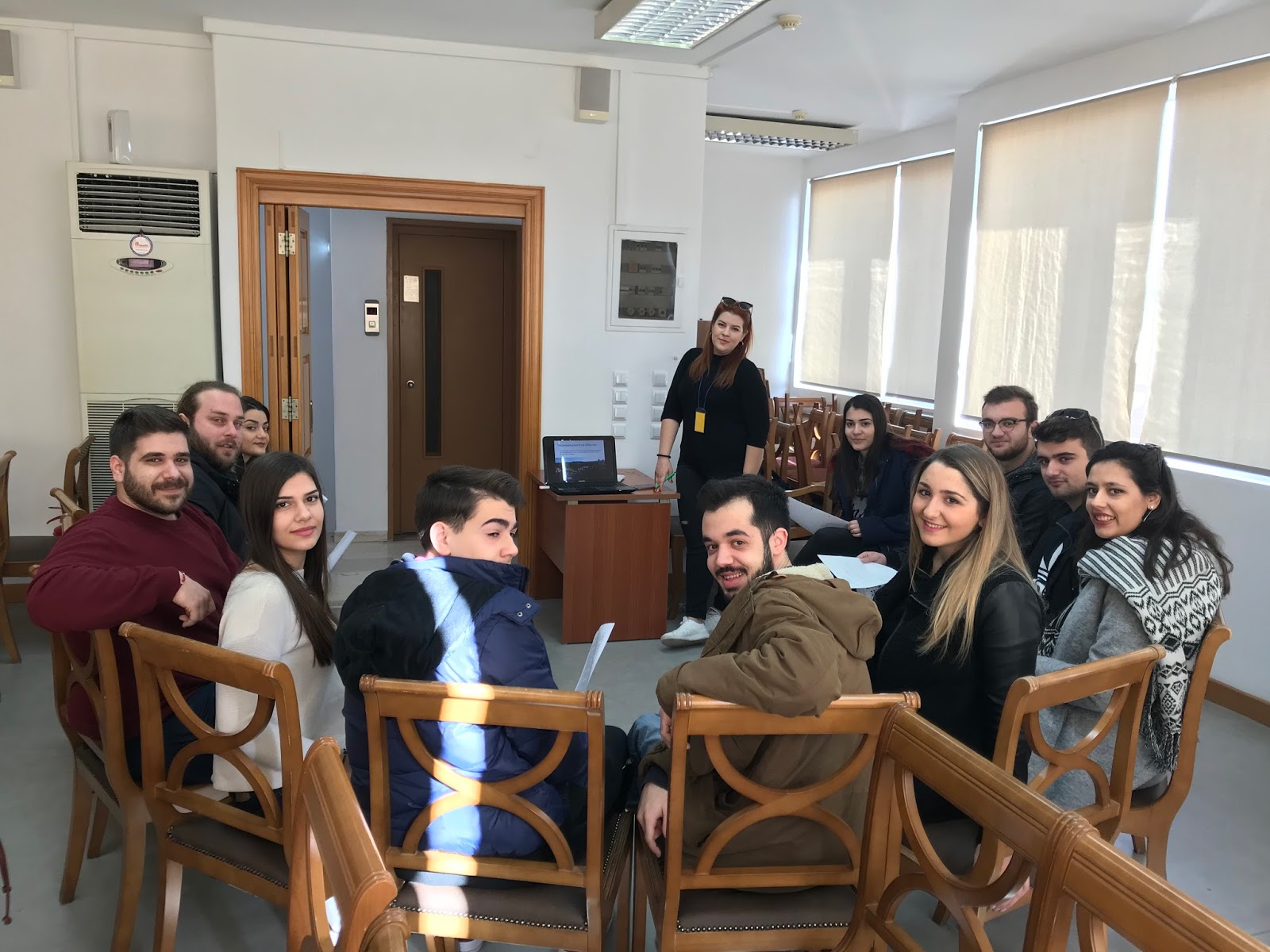
Attempting to respond to the question above, the 8 young people from Ileia who participated from 21 to 30 August 2017 in the youth exchange in Romania, in the framework of the project "Green Life for a Healthy Life", gathered in Pyrgos, the capital city of Elis county.


The workshop took place in 4 January 2018 in the meeting hall of the Elis’ Chamber of Commerce and its objective was the dissemination of the conclusions and the gained knowledge of the project to the Greek youth of the region.
The aim of the "Green Life for a Healthy Life" project was to record modern environmental issues at local level and to seek solutions through the use of renewable energy sources as an antidote to the destruction of the environment.


The table below presents the fields of study that the Greek group successfully covered:

Field of Study
Theme
Greek participant
Pollution and Environment
The Impact of Pollution on Environment
Aikaterini Michalopoulou
Solar Energy
Electricity from Solar Energy
Eleni Dakoura
Wind Energy
Wind and Electricity
Ilias Iliopoulos
Biopower
Biogass at Home
Andreas Angelopoulos
Solar Energy
Solar Hot Water
Dionysios Antonopoulos
Hybrid Power Systems
Green Idea for a Green House
Andriana Maria Varela
Local Utility of Renewable Energy
Local Renewable Energy Resources
Spilios Varelas
The Future of Renewable Energy
Fossil Fuels vs. Renewable Energy Resources
Eleni Michalopoulou

The “Green Life for a Healthy Life” project is implemented by The Green Teach Association (Candesti, Dambovita) and the local development centre “Dione” (Ancient Olympia, Elis), under the Erasmus+/ Key Action Learning Mobility of Individuals programme.